How much protein does a chicken breast give you?
The protein in a chicken breast depends on its weight and whether you weigh it raw or cooked. Use the label and the matching weight to estimate your portion accurately.
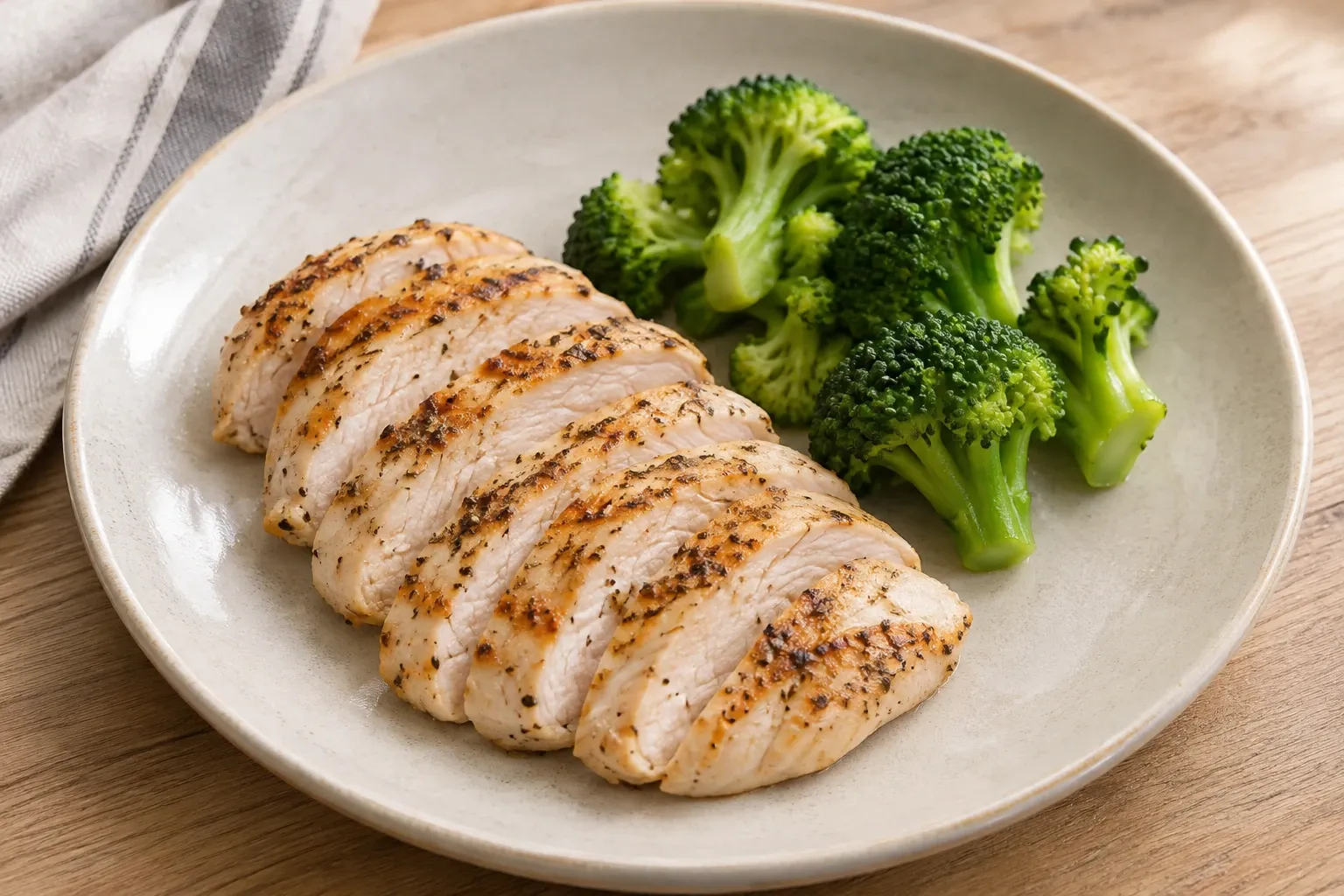
If you are planning meals around a run or strength session, a chicken breast can look like an easy way to count protein. The number is not fixed, though: breasts come in different sizes, and cooking changes the weight per 100g. Here is how to compare like with like, work out a portion from a UK product label, and use the result as one part of your everyday eating.
Why does the protein figure vary from one breast to another?
A chicken breast is a cut of meat, not a standard-sized portion. One fillet may be smaller or larger than another, so “one breast” does not identify a reliable weight or a fixed amount of protein. Pack sizes can help you see the total weight of several fillets, but dividing that total by the number of pieces gives only an average, not the weight of each one.
The basis for the nutrition figure matters too. A label may give values for chicken as sold, while a database or another label may describe cooked chicken. The UK government’s Composition of Foods Integrated Dataset is a reference for the nutrient composition of foods. For a particular shop-bought pack, however, the product label tells you the stated values for that product and whether they apply as sold or after cooking.
How much protein is in raw and cooked chicken breast?
As one specific example, Ocado lists its plain, skinless, boneless chicken breast fillets at 23g of protein per 100g as sold. That is a product-label figure for raw chicken, not a universal value for every brand or cut. Sainsbury’s lists 30.6g per 100g for its chicken breast when cooked according to its instructions. These figures use different preparation states, so they should not be read as a direct comparison of two identical 100g portions.
Cooking removes water from the meat, making the protein more concentrated by weight. It does not mean the cooking process has added protein. A cooked 100g portion represents a different amount of starting meat from a raw 100g portion. That is why cooked values per 100g can be higher than raw values, even though the original piece has not gained protein.
| Weight used for the estimate | Protein figure used | Estimated protein |
|---|---|---|
| 100g raw, using the Ocado example | 23g per 100g raw | 23g |
| 150g raw, using the Ocado example | 23g per 100g raw | 34.5g |
| 200g raw, using the Ocado example | 23g per 100g raw | 46g |
| 250g raw, using the Ocado example | 23g per 100g raw | 57.5g |
| 100g cooked, using the Sainsbury’s example | 30.6g per 100g cooked | 30.6g |
| 150g cooked, using the Sainsbury’s example | 30.6g per 100g cooked | 45.9g |
| 200g cooked, using the Sainsbury’s example | 30.6g per 100g cooked | 61.2g |
These are arithmetic estimates from the stated per-100g label values. They are not guarantees for every chicken breast. For the raw examples, multiply the weight in grams by 0.23; for the cooked example, multiply cooked weight by 0.306. Round the result sensibly: label values are typical nutrition information, not a laboratory analysis of the piece on your plate.
How do you calculate the protein in your portion?
- Check whether the pack’s value applies “as sold” or after cooking. If it says “as sold”, treat the figure as applying to the uncooked product.
- Weigh the edible chicken in the same state named by the label. For a raw label, weigh it raw; for a cooked value, weigh it cooked.
- Divide the portion weight by 100, then multiply by the protein listed per 100g. For example, 180g raw at 23g per 100g gives 1.8 × 23, or 41.4g of protein.
- Keep the estimate with the meal and remember it is one food’s contribution, not automatically your whole-day target.
If you buy a pack containing two fillets with a stated total weight of 350g, dividing by two gives a 175g average per fillet. It does not prove that each piece weighs 175g: one could be heavier and the other lighter. Weigh the piece you plan to eat if you want a closer estimate, and use the package’s actual nutrition information where available.
Does the protein count help you plan a training meal?
It can help you understand what chicken contributes, but there is no need to make every meal a calculation. Your overall eating pattern matters, and chicken can sit alongside foods that provide carbohydrates, fibre and other nutrients. If you are deciding what to eat around exercise, the nutrition basics for training put protein in the context of a balanced approach. For a personalised daily amount, see how to set a protein target rather than treating one chicken portion as the target itself.
For a quick meal, pair the chicken with foods you enjoy and can fit into your day. A portion might be sliced into a sandwich, mixed through a grain bowl or served with vegetables and potatoes. If you want more meal inspiration, try high-protein dinner ideas. The protein estimate stays the same calculation whichever recipe you choose, but added ingredients can change the nutrition of the finished dish.
What should you check before relying on the number?
Start with the exact pack in your fridge. Check that the product is plain chicken rather than a marinated, breaded or otherwise prepared product, and read whether its values are for the food as sold or cooked as instructed. Different products can have different stated values, and product details can change. The Ocado and Sainsbury’s examples above illustrate why the preparation state and label wording matter; they are not a claim that every UK product has those numbers.
Then check the weight basis. Do not multiply a cooked weight by a raw per-100g figure, or the reverse. If you have only weighed the portion after cooking but have a raw label, you would need the raw weight to use that label directly. Rather than guessing how much water was lost in your cooking, use a matching cooked-food entry or weigh the portion before it goes into the pan or oven.
Finally, handle and cook poultry safely. The Food Standards Agency says the centre should reach 70°C for 2 minutes, or an equivalent time and temperature such as 75°C for 30 seconds; a clean food thermometer helps check this. Its cooking advice also explains that poultry needs to be cooked thoroughly. Food safety is separate from protein counting, but it matters whenever you prepare raw chicken.
Frequently asked questions
Does cooking add protein to chicken?
No. Cooking does not add protein to the meat. It reduces water and the cooked piece weighs less, so its protein is more concentrated per 100g. The total protein in the piece is broadly similar, although some juices may be lost during cooking. For a useful estimate, use a raw value with raw weight or a cooked value with cooked weight.
Can I use the protein value on a raw chicken packet for cooked weight?
Not directly. A value listed per 100g as sold refers to the uncooked product, while your cooked portion has lost water and weighs less. Either weigh the chicken before cooking and use the as-sold value, or use a cooked-food value with its cooked weight. Avoid combining a raw value with cooked grams, as that mixes two different bases.
How can I weigh chicken accurately for meal tracking?
For the simplest comparison with a raw pack label, weigh the edible, skinless meat before cooking and record the amount. If you prefer to portion after cooking, use a cooked-food entry and weigh it cooked. Keep your method consistent between meals. If a pack contains added ingredients or the label gives cooking instructions, follow the information for that particular product.