A beginner swimming workout plan to build pool fitness
If you can already swim safely but are unsure how to turn lengths into a workout, a simple session structure gives you a clear starting point. These example swims use 25-metre lengths, generous rests and gradual changes in distance.
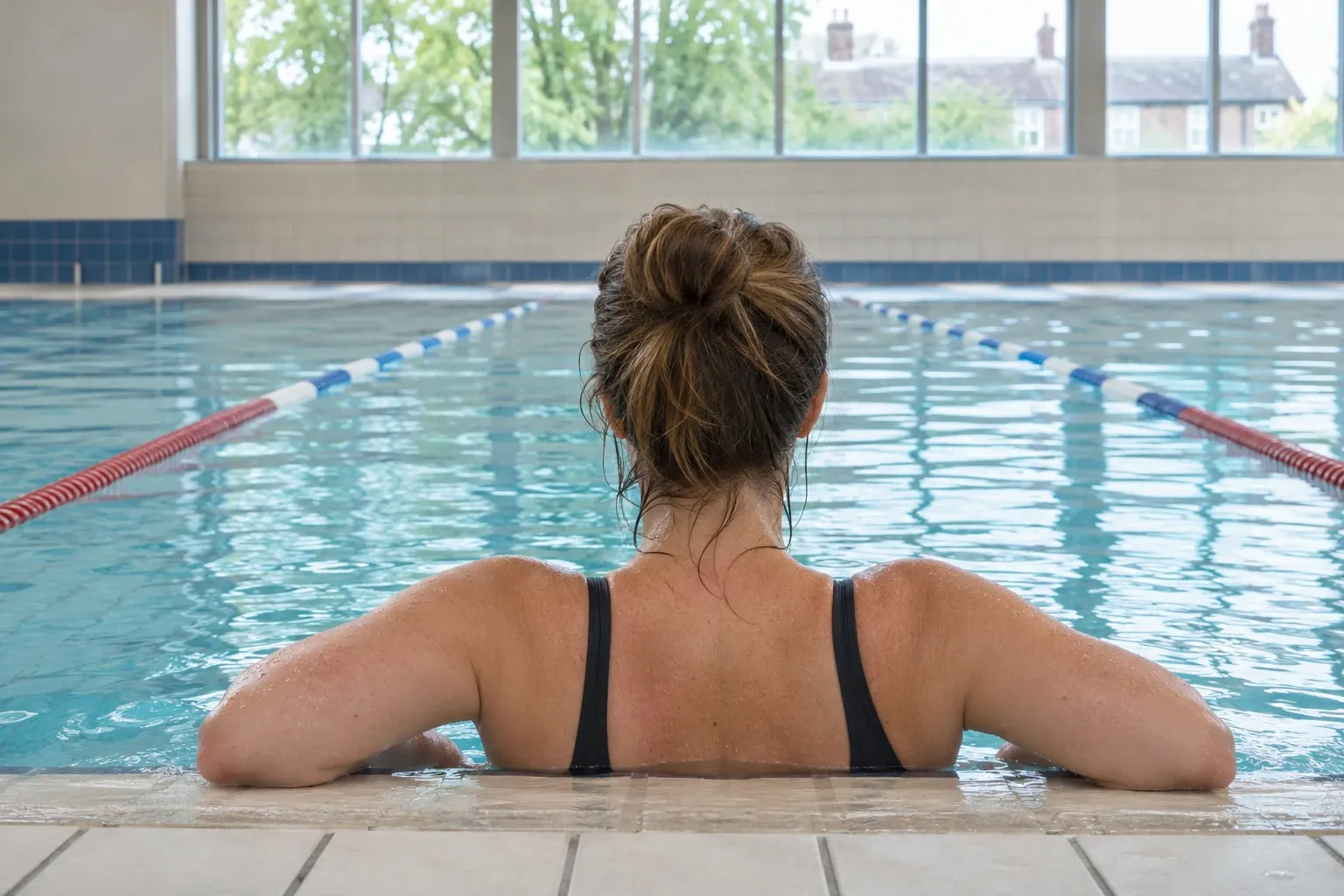
Walking into the pool with no plan can make it tempting to swim until you are tired, then leave without knowing what to do next time. A little structure helps you keep the effort manageable and gives each visit a purpose, whether that is practising a relaxed stroke or swimming a few more lengths. The sessions below are for adults who can already swim safely; they are not swimming lessons or a route to learning water survival skills.
What makes a useful first swimming workout?
A useful session is one you can finish without rushing, losing control of your breathing or feeling you have to prove anything. Treat the distances here as examples, not targets you must hit. The plan assumes you can already swim 25 metres safely in a pool and can stop at the wall whenever you need. If you cannot yet do that confidently, book adult swimming lessons instead of trying to use a fitness plan.
A session can have four parts: an easy warm-up, a short technique focus, a main set of repeats, and an easy finish. A repeat is one distance swum a set number of times; for example, 4 × 25 metres means four lengths of 25 metres. Keep your pace comfortable enough to maintain control. Rest at the wall for as long as you need between lengths or sets. Do not race other swimmers or try to keep up with a lane that is moving faster than you.
Swim England’s programme is one example of a structured progression: it starts at 12 lengths, given as 300 metres, and reaches 38 lengths, or 950 metres, by session 10. That is an existing programme, not a requirement for you to match; choose a starting distance that feels manageable. Its sessions use a warm-up, skill work, a main set and a swim-down, a practical structure you can adapt to your own pace, as shown in Swim England’s swimming fitness programme.
Which session should you try first?
Begin with Session A. It totals 600 metres in a 25-metre pool: 100 metres of easy warm-up, 100 metres of gentle technique practice, 200 metres of relaxed main-set swimming, 100 metres of easy swimming between efforts, and 100 metres to cool down. Each segment is broken into lengths so you can stop and rest at the wall. If 600 metres feels like too much, do fewer repeats; there is no need to complete every length on your first visit.
For the warm-up, swim 4 × 25 metres easily. Then do 4 × 25 metres focusing on one simple cue, such as letting your body stay relaxed and moving smoothly through the water. These are not breath-control drills: breathe normally, keep your face clear of the water as needed, and never hold your breath. For the main set, swim 4 × 50 metres at an even, comfortable effort. If a 50-metre repeat feels too long, break it into two 25-metre lengths with a rest at the wall. Finish with 4 × 25 metres easy and another 4 × 25 metres very gently.
Session B totals 650 metres. Swim 4 × 25 metres easily to warm up, then 4 × 50 metres at a relaxed pace. For the main set, swim 6 × 25 metres at a steady effort, resting whenever you need. Finish with 4 × 25 metres easy and 4 × 25 metres very gently. These quantities are illustrative; shorten the set or add rest if your technique becomes ragged, you feel dizzy, or you develop pain. US Masters Swimming’s beginner workout advice likewise treats rest as something you can take as needed, rather than a test of toughness, in its beginner swimming workouts.
How can you fit the swims into a week?
Try Session A and Session B on separate days in your first week. That gives you two different but manageable swims and a chance to notice how you feel afterwards. If both sessions feel comfortable, repeat them the following week before making a small change. For example, add one 50-metre repeat to the main set of Session A: its total becomes 650 metres. Or add one 50-metre repeat to Session B: its total becomes 700 metres. Change one thing at a time, and only progress if you can complete the existing session with steady breathing and controlled movement.
If you have a running goal as well as a swimming routine, treat pool sessions as part of your overall training rather than trying to increase every workout at once. The site’s running training for a first challenge covers how to build towards a 5k, 10k or half marathon. For a different low-impact activity, you could also try a beginner Pilates routine, keeping the week manageable rather than stacking hard sessions together.
You can also make the swim feel more purposeful without adding distance. On one visit, focus on relaxed lengths; on another, notice whether you can keep a similar effort from the first repeat to the last. If you do a brief warm-up out of the water, keep it comfortable and use dynamic movements before exercise rather than rushing into intense stretches. The pool warm-up still matters: begin with easy swimming before trying a steadier set.
How do you know when to adjust the plan?
At the end of each swim, note what you completed and how it felt. A simple record might say “Session A, 600 metres, easy pace, needed extra rest after the 50s.” That is more useful than judging the session only by speed. If you could keep your stroke controlled and recover between repeats, repeat the same distance next time or make one small increase. If you were struggling to breathe comfortably or had to stop because of pain or dizziness, do not increase the workload; stop the session and seek appropriate help if symptoms persist or concern you.
Use a pool with a lifeguard on duty and follow its lane and safety rules. Rest freely at the wall, stay aware of other swimmers, and leave the water if you feel unwell. Never use breath-holding as a training exercise. Swimming fitness is not a substitute for swimming instruction: if you are not confident in the water or cannot swim a length safely, work with a qualified teacher before using a workout plan.
Your next session does not have to be longer. Repeating a distance with better control, taking the rests you need, or finishing feeling ready to return are all sensible ways to build a consistent routine. Once the current swims feel manageable, adjust a small part of the plan and give yourself time to see how your body responds.
Frequently asked questions
How many times a week should a beginner swim?
Start with two sessions a week if that fits your schedule and leaves you feeling ready to return. Keep at least a day between swims if you are sore or unusually tired. You can add another session later if recovery is comfortable, but there is no need to swim on consecutive days or to increase frequency and distance at the same time.
Do I need to swim front crawl for these workouts?
No. Use a stroke you can swim comfortably and safely, and switch strokes or rest when you need to. If front crawl breathing or technique feels uncertain, take a lesson or ask a qualified swimming teacher for help rather than forcing longer repeats. The goal of these example sessions is steady, controlled practice, not a particular stroke or speed.
Should I use a kickboard, fins or a pull buoy?
You do not need specialist equipment to begin; a swimsuit and goggles are enough for many pool sessions. A pool may provide equipment, but check its rules before using it. If an aid makes you uncomfortable, changes your breathing or distracts you from safe movement, leave it aside. Equipment can support a drill, but it does not replace swimming skills or supervision.