A beginner Pilates workout plan you can build into your week
If you want to add strength and controlled movement to your week but are new to Pilates, start with a short, repeatable routine rather than chasing difficult poses. This adaptable plan gives you a simple session structure, easier options and clear ways to judge whether to progress.
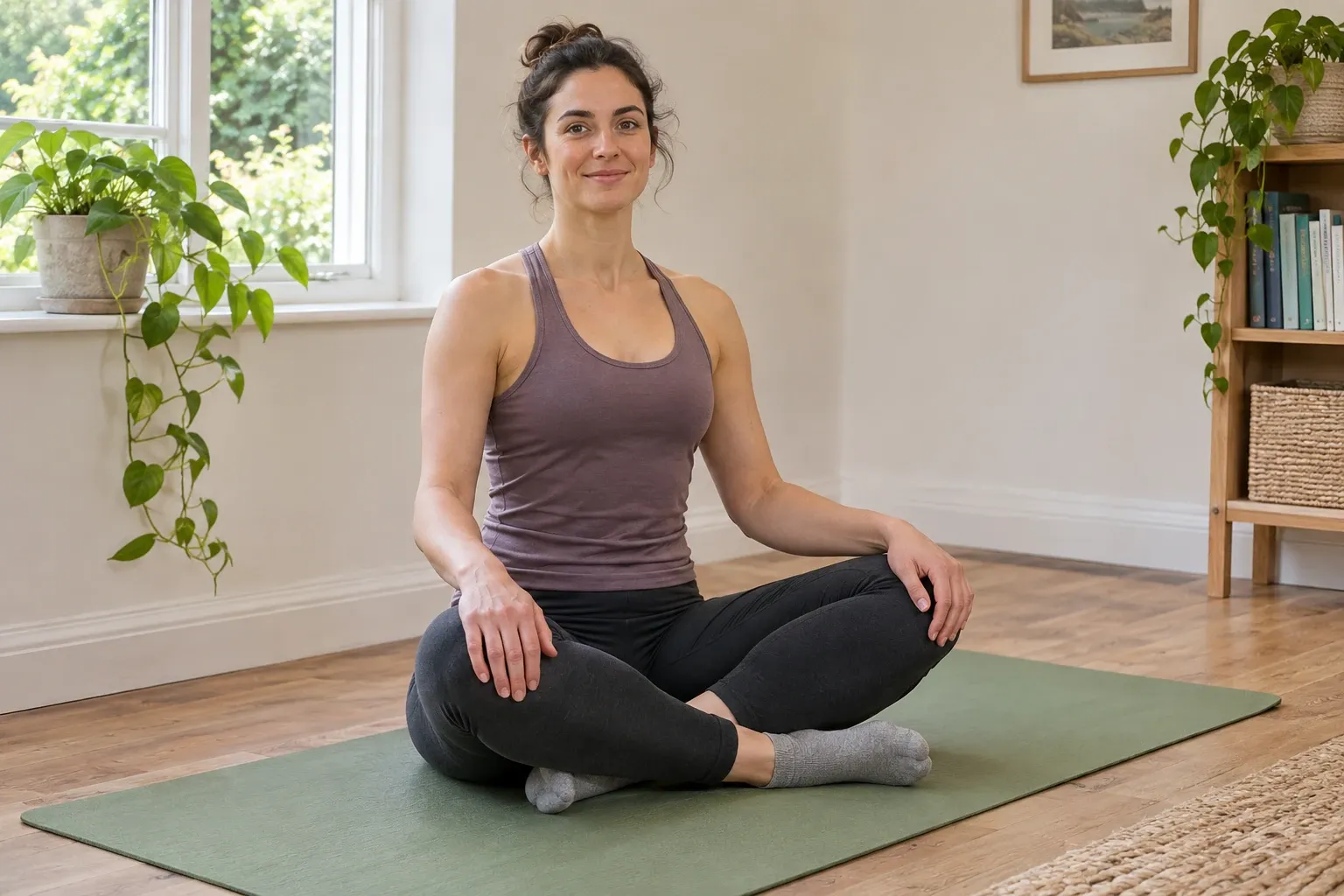
Starting Pilates at home can feel uncertain: you may wonder which movements are genuinely beginner-friendly, how many to do and whether the session will interfere with running or other training. You can keep the first steps modest: practise a few controlled movements on a mat, breathe continuously and stop any exercise that causes pain or makes you feel unwell.
The plan below is an editorial example, not a clinical programme or an NHS protocol. It shows one way to organise a short practice, how to make movements easier and what to check before increasing the challenge.
What should your first Pilates session feel like?
Pilates is a form of exercise that focuses on balance, posture, strength and flexibility. You do not need previous experience to try the NHS beginner video, which lasts 45 minutes; that is one available class, not a time target for your first home session, according to the NHS beginner Pilates video page. If you are starting from scratch, a shorter practice can be easier to fit into your week and repeat consistently.
This routine is an adaptable editorial example for a generally healthy adult. It is not a treatment plan, and it is not the NHS Wales clinical Pilates class. Cardiff and Vale University Health Board describes its introductory Pilates material as preparation for beginner and intermediate classes and advises people to practise the introductory video for technique; its separate beginner PDF is a clinical resource with specific instructions about who should complete it, as explained on the Cardiff and Vale Pilates exercises page.
Keep the effort comfortable enough that you can pay attention to how you move. Aim for smooth, small movements rather than stretching to your limit. You should not have to hold your breath, brace your jaw or push through pain to finish a repetition.
How often should you practise as a beginner?
For the first two weeks, use this as a flexible editorial practice range: try one or two sessions per week, with a rest or another comfortable activity between them. Set aside roughly 10 to 20 minutes for each session, including a few minutes to settle into your breathing and change position between exercises. These are planning suggestions for this example, not NHS exercise targets or a guaranteed progression schedule.
If Pilates is supporting a running goal, keep your run training and recovery in view rather than treating Pilates as a replacement for running. A beginner Pilates session can sit alongside a gradual running routine; the broader choices for building towards a first event are covered in a first running challenge plan. If you are planning a more active day, use gentle movement to prepare rather than forcing a deep stretch; a dynamic warm-up before exercise is a separate option for the workout itself.
What exercises can you put in the routine?
Choose a stable surface and move through the following sequence at an unhurried pace. The repetitions and holds below are editorial starting ranges, not clinical prescriptions. Keep breathing throughout. Rest briefly whenever you need to reset.
- Breathing and comfortable alignment. Lie on your back with knees bent and feet resting on the floor, or sit in a comfortable position if lying down does not suit you. Take four to six relaxed breaths. Breathe in gently, then breathe out without forcing your stomach flat or tightening as hard as possible. Let the ribs and abdomen move naturally.
- Pelvic tilts. In the same position, breathe out and gently tip your pelvis so your lower back moves a little closer to the floor. Breathe in as you return to a comfortable middle position. Try six to eight slow repetitions. Keep the movement small; do not press hard into the floor. For an easier version, reduce the range or practise the movement seated.
- Heel slides. Keep both feet down. Slowly slide one heel away until the leg is only as straight as feels comfortable, then bring it back as you breathe out. Alternate sides for four to six repetitions each. Keep the pelvis quiet rather than letting the back arch or twist. Make the slide shorter if you cannot keep the movement smooth.
- Knee openings. With knees bent and feet planted, let one knee open a small distance to the side while keeping the other leg still. Bring it back with control and alternate sides for four to six repetitions each. Keep the range modest; do not let the pelvis roll with the leg. If this feels awkward, skip it and repeat comfortable breathing instead.
- Side-lying leg lift, optional. Lie on your side with knees slightly bent and your head supported by your lower arm or a cushion. Keeping the top leg relaxed and straight, lift it a small distance, then lower slowly. Try four to six repetitions per side. If you feel strain in your back or hip, bend the knees more, reduce the lift or leave this movement out.
- Seated posture reset. Sit tall on a chair or the floor, whichever is more comfortable. With shoulders relaxed, breathe in and gently lengthen through the top of your head; breathe out and release any unnecessary tension. Repeat for four to six breaths. This is a calm finish, not a demand to hold a rigid posture.
You can leave out any exercise that does not feel suitable and still have a complete short practice. In particular, there is no need to add sit-ups, long holds, leg raises or advanced balance work to make the session worthwhile. A consistent, comfortable range is more useful than a movement you cannot control.
How can you adapt the plan to your week?
For weeks one and two, repeat the same short sequence once or twice a week so you can become familiar with the positions. If you would rather start smaller, do the breathing, pelvic tilts and heel slides only; that is a reasonable editorial modification. If your day is busy, split the practice into two brief blocks, but do not feel obliged to make up missed sessions.
After you have tried the routine a few times, change only one thing at a time. For example, add one or two repetitions to a movement, include one optional exercise, or extend the session by a few minutes. Keep the original version if you feel tired, your breathing becomes strained or you start to rush. A more difficult variation is optional, not a milestone you have to reach.
How do you check whether the plan is working for you?
After each practice, make a quick note of which movements felt comfortable, which needed a smaller range and whether you finished feeling well. Use that information to choose your next session. Improvement here means that you are more familiar with the sequence or can control a movement comfortably; the plan does not promise weight loss, a particular strength gain or a specific result.
Stop immediately if you feel pain or become unwell. NHS advice says to get guidance from a healthcare professional before trying its general exercise videos if you have a health problem, injury, symptoms, feel unwell, have had a recent operation or health event, are pregnant or have recently given birth. If you have an illness, are recovering from an injury or surgery, or are pregnant, seek advice appropriate to your situation before using this general example. The NHS pregnancy exercise advice also recommends starting new exercise gently, adapting activity as pregnancy progresses and stopping if you feel uncomfortable, too hot or unwell.
If a movement hurts, do not try to push through by changing your breathing or forcing a smaller-looking version. Stop that movement. If symptoms concern you or do not settle, seek appropriate healthcare advice. You can return to the plan only when it feels suitable for you.
Frequently asked questions
Can I do Pilates on the same day as a run?
You can try a short, gentle Pilates session on the same day if you feel well and have enough energy, but there is no need to force both workouts into one day. If you are new to either activity, separate them at first so you can judge how you respond. Keep the Pilates movements controlled, and reduce or skip the session if you feel unusually tired or uncomfortable.
Do I need a reformer or other Pilates equipment?
No equipment is required for this mat-based example. A mat can make floor movements more comfortable, but a clear, stable floor and comfortable clothing are enough to begin. The NHS says a mat would be useful for its beginner video, rather than essential. Avoid adding resistance bands or weights until you can perform the basic movements with control.
How should a beginner progress without making the exercises harder too quickly?
First check that you can move smoothly, breathe without holding your breath and finish without pain or feeling unwell. If the session feels manageable on more than one occasion, change just one element, such as adding a repetition or a few minutes. Keep the simpler version if your form changes or symptoms appear. There is no requirement to progress every week.