A morning stretching routine to get moving before your day
If you wake up feeling stiff or are about to train, a few controlled movements can help you ease into the day. Start with light movement, then choose stretches that feel comfortable rather than forcing a deeper range.
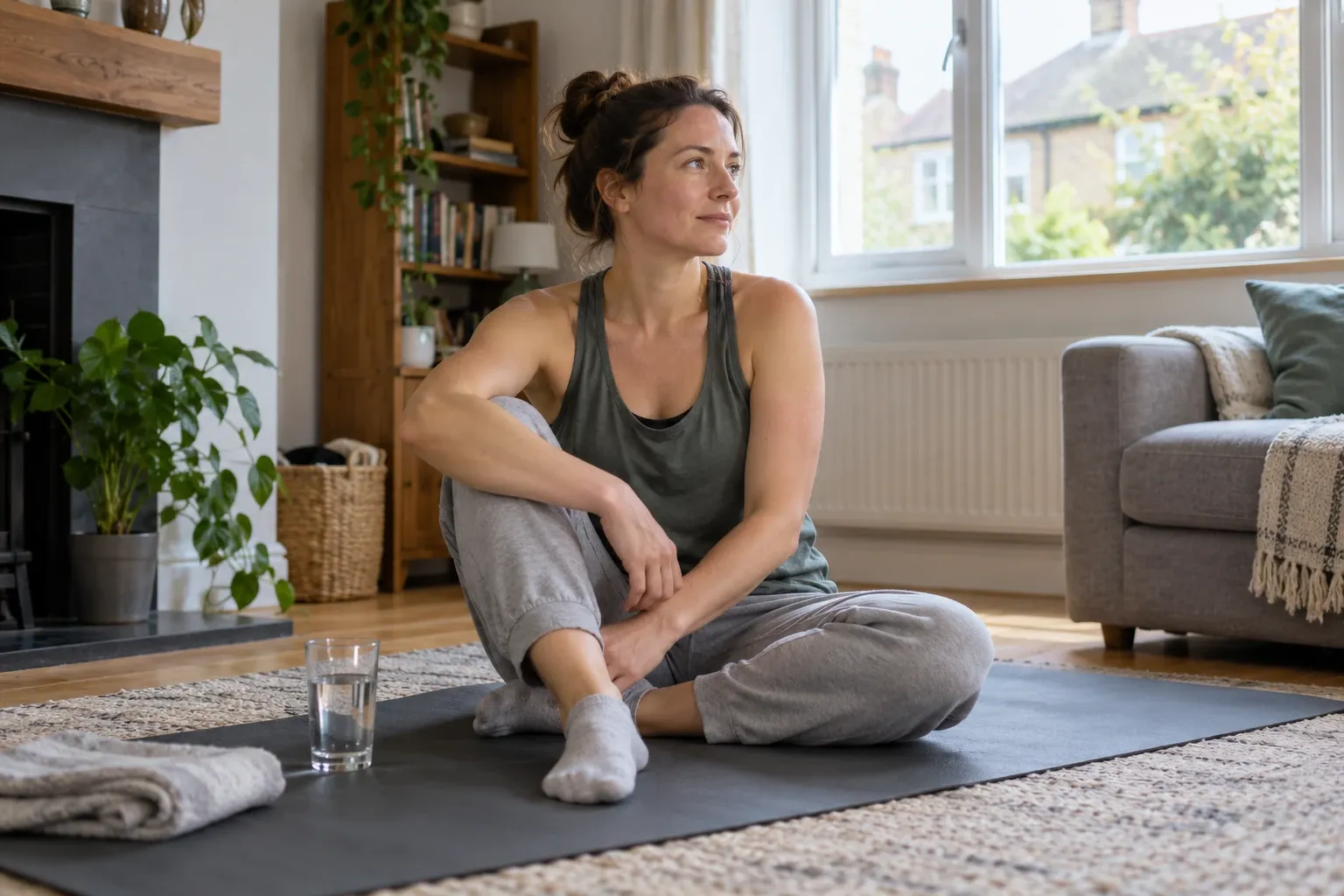
A morning stretch can be a useful pause between getting out of bed and starting work, a walk or a run. It does not need to be an intense workout, and stretching alone is not a substitute for the warm-up you need before harder exercise. A practical routine starts gently, moves through a few areas of the body and gives you time to notice how each position feels.
What should a morning stretch do for you?
A useful routine is one you can do calmly and consistently, not one that tests how far you can reach. Gentle stretching can help you practise comfortable movement, but it is not a treatment for pain and it does not guarantee that you will avoid injury. Think of it as a way to move through a few positions and check how your body feels before the day gets busy.
If you are preparing for a running goal, stretching is only one small part of your training. Your running plan, strength work and rest have different jobs; a few morning movements do not replace them. You can build the wider picture around training for your first running challenge, while keeping this routine simple and separate from your harder sessions.
Should you stretch before or after a warm-up?
If you have just got out of bed, begin with easy movement rather than immediately pulling a muscle into a long stretch. Walk around the room, march gently on the spot or roll your shoulders. The American Heart Association says muscles are best stretched when warm and suggests a few minutes of easy walking if stretching is the only activity you plan to do. Its general guidance also says that when stretching alongside endurance or strength exercise, stretch after rather than before the session.
For a run or strength workout, treat your morning routine as a gentle mobility break, not as the session’s full warm-up. Before exercise, use movements that gradually bring you towards what you are about to do. For example, start a run with easy walking or jogging and build the pace progressively. Static stretches alone do not provide that gradual build-up.
Which stretches can you include?
Choose a small selection that feels relevant to the day. The NHS flexibility exercises include seated neck movements, a sideways bend and a supported calf stretch. These are examples rather than a compulsory sequence: you do not need to cover every body part every morning.
You could try this unhurried sequence:
- March gently on the spot. Keep the movement easy and let your arms swing naturally. Stop if you feel unsteady.
- Turn your head gently from side to side. Stay upright, keep your shoulders relaxed and turn only as far as feels comfortable.
- Roll your shoulders. Move them up, back and down without shrugging hard or rushing.
- Reach into a small side bend. Stand with your feet comfortably apart and slide one hand down the side of your leg. Keep the movement modest; return to upright and change sides.
- Stretch your calves against a wall. Place your hands on a wall for support, step one foot back and keep that heel on the floor if comfortable. Change sides.
The NHS’s flexibility page specifies three rotations on each side for its neck rotation and three repetitions on each side for its calf stretch. For its sideways bend, it describes three repetitions on each side, holding each for two seconds. Those are instructions for the NHS exercises as presented, not a requirement to copy every repetition into your personal morning routine. If a movement feels awkward, choose a smaller range or skip it.
How long should you hold each position?
For a static stretch, settle into a comfortable position gradually, breathe normally and avoid bouncing. The American Heart Association recommends holding a stretch for 10 to 30 seconds, repeating it three to five times during a session; it advises people new to stretching to start with about 10 seconds. You do not have to use the longest hold or the most repetitions to make a morning routine useful.
There is a difference between that general guidance and the NHS instructions for its particular exercises. For example, the NHS post-exercise routine gives a total duration of about five minutes and specifies 15 to 20 seconds for each of its listed stretches, including its calf and hamstring stretches. That routine is designed as a cool-down after exercise, so its timings are a reference point, not a required length for a morning routine.
A practical starting point is to pick two or three positions and hold each briefly, without straining. If you are new to stretching, begin at the shorter end of the American Heart Association’s range. If you prefer moving rather than holding, keep the movement slow and controlled; do not bounce at the end of your range.
How can you adapt the routine to the day?
On a quiet morning, a few gentle movements may be enough to help you transition into your day. Before training, keep stretches easy and then do a specific warm-up for the activity. After a run, you could instead use a cool-down and stretches such as those described by the NHS. The right choice depends on what you are doing next, not on a need to complete an elaborate sequence.
You can also adjust for comfort and space. Use a wall or a stable support for balance during standing movements. If getting down to the floor is inconvenient, choose seated or standing options. Wear clothing that lets you move freely, and keep the range small enough that you can stay relaxed and breathe normally.
How do you know whether it is working for you?
Judge the routine by whether it feels manageable and whether it fits your morning, not by how far you can reach. Afterward, you should be able to carry on with your normal activities without feeling that you have had to force a position. If you regularly skip the routine because it takes too long, reduce the number of movements rather than turning it into a test of willpower.
A mild pulling feeling can be part of a stretch, but sharp or stabbing pain and joint pain are signals to stop, according to the American Heart Association. Do not force your range or bounce to get deeper. If you have an injury, a medical condition or are pregnant, the NHS advises that you may need changes to its post-exercise stretches and should ask a physiotherapist or healthcare professional which movements are suitable. A routine should make room for how you feel that day; it should not override it.
Frequently asked questions
Should I stretch as soon as I get out of bed?
You can begin with gentle movements, but do not force a deep stretch while you still feel cold or stiff. Walk around, march on the spot or move your joints gently first. If a particular position feels uncomfortable, make it smaller or leave it out. For a run or another demanding session, follow this light routine with a warm-up that gradually builds towards the activity.
How long should I hold a morning stretch?
There is no single timing that suits every stretch or person. The American Heart Association gives a general range of 10 to 30 seconds for each stretch and advises starting at about 10 seconds if you are not used to stretching. The NHS’s post-exercise routine uses 15 to 20 seconds for its listed stretches. Keep the position comfortable and let go sooner if it hurts.
Can this routine replace a warm-up before running?
No. A still stretch does not gradually prepare you for the pace and movement of a run. Before a training session, begin with easy activity such as walking or jogging slowly, then build towards your planned effort. Use stretching as a separate mobility habit or after exercise, rather than relying on it to prepare you for harder work.
What should I do if stretching causes pain?
Stop the stretch if you feel sharp, stabbing or joint pain; do not push through it or bounce to gain more range. A mild pulling sensation can occur, but pain is a reason to ease off. If you have an injury, a medical condition, are pregnant or are unsure whether an exercise is suitable, seek advice from a healthcare professional before continuing.