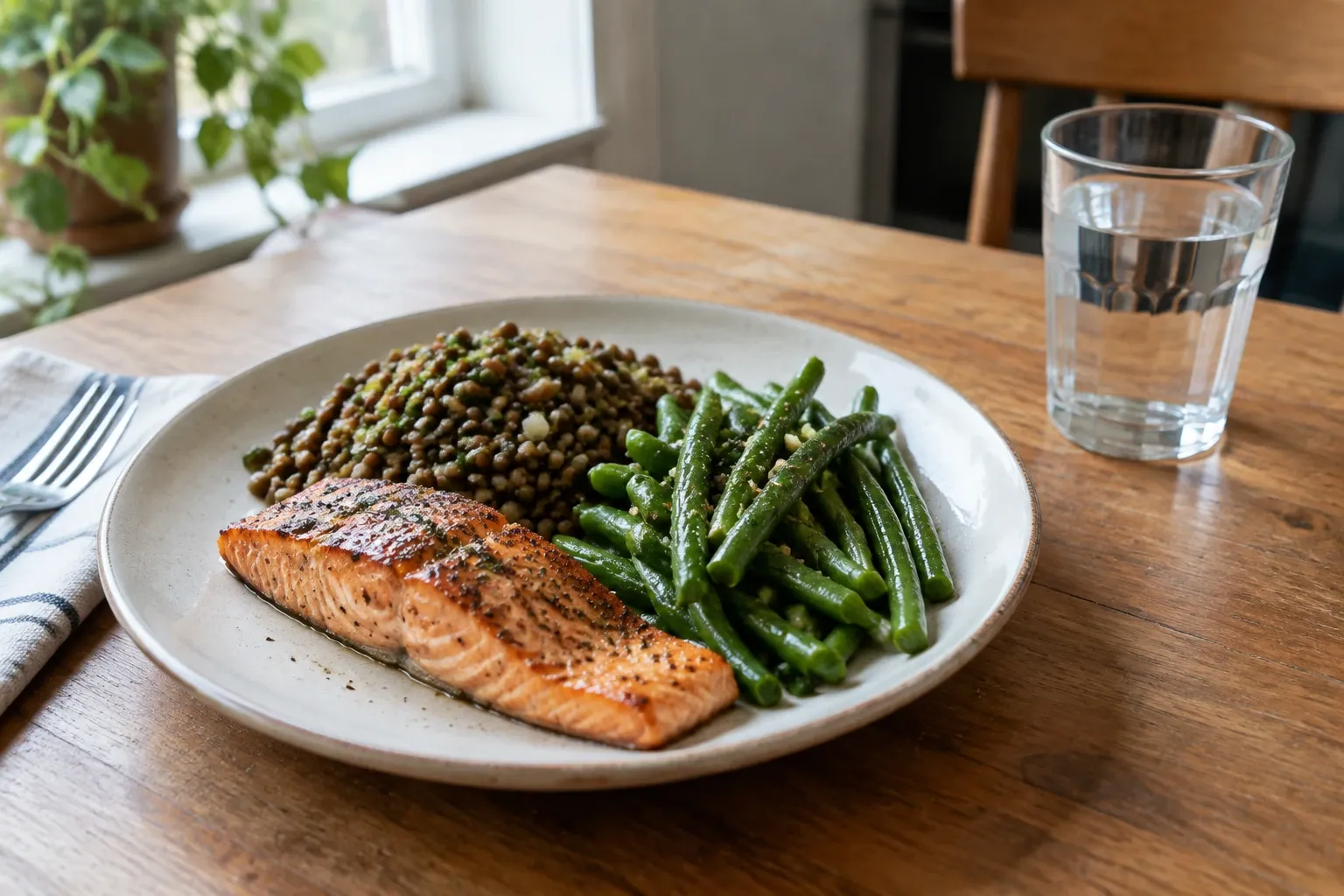
If you are training regularly, choosing high-protein foods can help you make meals that support your routine without relying on shakes or specialist products. The useful choice is not simply the food with the most protein: cost, fibre, salt, saturated fat, preference and what else you need to fuel training all matter.
What makes a protein food a useful choice?
Start with foods you enjoy and can include consistently. The NHS Eatwell Guide lists beans, pulses, fish, eggs, meat and other protein foods, and notes that pulses also provide fibre. It advises choosing lean meat and eating less red and processed meat, such as bacon, ham and sausages, in its balanced eating guidance.
Protein needs depend on body weight and individual circumstances. The UK reference value for adults is 0.75g of protein per kilogram of body weight a day; this is a population reference, not a personalised target for every training goal. For a closer estimate, read about working out your daily protein needs. If you have a medical condition affecting your diet, ask a GP or registered dietitian before making a substantial change.
Which high-protein foods suit different meals?
Animal-based options include eggs, milk, yoghurt, fish and lean meat. Plant-based choices include beans, lentils, chickpeas, peas, tofu, nuts and seeds. Pulses can be especially practical: add them to soups, curries or pasta sauces, or combine them with another protein food. The Eatwell Guide recommends including a range of protein foods rather than relying on one source.
Check the food label when comparing packaged options. The Food Standards Agency explains that nutrition information includes protein, alongside energy, fat, saturated fat, carbohydrates, sugars and salt. Look at the serving you actually eat, and consider the whole label rather than choosing by protein alone.
Breakfast is one place where a simple swap can help: eggs on wholemeal toast, yoghurt with oats, or beans on toast are examples to build around. For more options, use these high-protein breakfast ideas.
How do fibre and carbohydrates fit in?
A high-protein meal does not need to crowd out carbohydrates. Bread, oats, rice, pasta and potatoes can provide training fuel; choose wholegrain versions or leave potato skins on when they suit your meal. Add vegetables, fruit or pulses for fibre and variety. UK dietary guidance sets an average population fibre reference of 30g a day for adults aged 16 and over, and the government advises getting fibre from varied food sources. Practical ways to add fibre-rich foods include beans, lentils, wholegrain bread, oats, fruit and vegetables.
If you are exercising, think about the meal as a whole: include a protein food, a carbohydrate source and produce that you enjoy. The right amount and timing depend on your training, appetite and schedule; there is no need to make every meal a supplement-style formula.
Do you need a protein or creatine supplement?
Most people can start by building meals from ordinary foods. A protein powder is a convenient option if it solves a practical problem, but it is not automatically better than food. Compare its protein per serving, ingredients, cost and how it fits your overall diet.
Creatine is different from protein: it is a supplement studied mainly in relation to repeated high-intensity exercise and training adaptations, not a protein food or a substitute for meals. An International Society of Sports Nutrition position stand reports evidence for creatine monohydrate in high-intensity exercise capacity and lean body mass during training, while its findings should not be read as a guarantee for an individual. Read about creatine’s uses and possible side effects before deciding whether it is relevant. The same basic evidence applies to women; this overview of creatine for women discusses considerations specific to that topic. If you have kidney disease, take medication or are unsure whether a supplement is appropriate, seek advice from a healthcare professional.
How can you tell whether your choices are working?
Review your meals over a typical week rather than judging one plate. Are you including a protein source regularly? Do meals also provide enough carbohydrates to suit your activity, and fibre-rich foods across the day? Are the choices affordable, satisfying and easy to repeat?
If your training, appetite or health needs change, your food choices may need to change too. Keep a short food-and-training note if it helps you spot patterns, but avoid treating a single day’s intake as a verdict. The goal is a workable eating pattern, not the highest possible protein number.