Healthy protein snacks to fit around training and busy days
Between work, training and the next meal, a snack can be a practical way to add protein without reaching for a specialist product. Choose from everyday dairy, eggs, fish, pulses and nuts, then match the portion to your appetite and schedule.
You might need something portable after a run, a quick bite between meetings, or an option that keeps you going until dinner. A useful protein snack does not need a special label: ordinary foods can contribute protein alongside fibre, carbohydrates or other nutrients. The best choice depends on what you like, how hungry you are, whether you can keep it chilled and what else you have eaten that day.
What makes a protein snack useful?
Start with the job the snack needs to do. If you want a small bite, a boiled egg or a little yoghurt may be enough. If you have several hours before your next meal, pair a protein food with fruit, bread, oats or vegetables to make something more substantial. Hunger, taste, budget and what you have available matter just as much as the protein number on the packet.
Protein is only one part of everyday eating. The NHS says its Eatwell Guide is about the overall balance of food groups, not getting every meal exactly right; it also includes pulses, fish, eggs, meat, dairy and alternatives among foods that provide protein. You can keep your broader eating pattern in view through everyday food choices around training rather than treating every snack as a test.
Which everyday options provide protein?
The amounts below are approximate values per 100g from the British Nutrition Foundation’s table of common foods. They are not necessarily what you will eat in one sitting: a pot, slice or handful may weigh considerably less, and products can differ. Check the label on your own food for the most relevant figure.
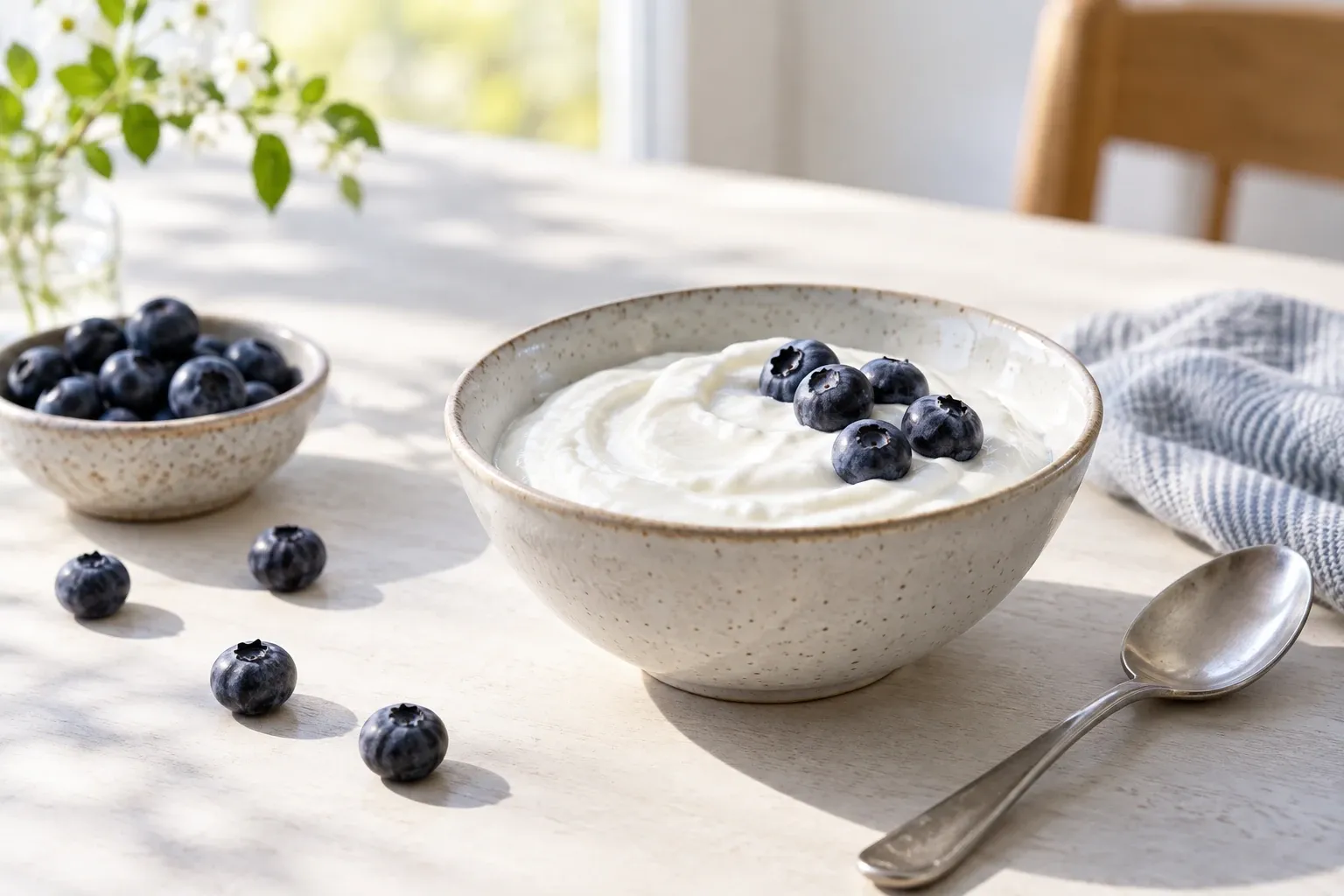
Plain Greek-style yoghurt provides about 5.7g of protein per 100g, while cottage cheese provides about 9.4g. Either can be eaten with fruit or chopped vegetables; yoghurt also works with oats, and cottage cheese can go on toast or oatcakes. If you prefer something drinkable, milk contains about 3.4g per 100g when whole and 3.5g when semi-skimmed, according to the same British Nutrition Foundation food table. These figures describe protein, not the full nutritional profile, so consider the rest of the label too.
A boiled whole egg contains about 14.1g per 100g. It is easy to combine with wholemeal toast, or pack alongside tomatoes or fruit. For a fish option, canned tuna in brine contains about 24.9g per 100g in the table. Mix a small amount into a sandwich or serve it with crackers and salad; follow the pack’s storage directions once opened.
Plant-based choices offer variety as well. The table lists about 7.6g of protein per 100g for boiled red lentils, 7.2g for canned chickpeas, 6.9g for canned kidney beans and 8.1g for steamed tofu. Try hummus with wholemeal bread or crunchy vegetables, seasoned chickpeas, or tofu in a small leftover portion. Pulses bring fibre as well as protein, and the NHS Eatwell Guide identifies beans, peas and lentils as sources of both.
Nuts can be handy when refrigeration is not practical, but their protein is not the only consideration: they are energy-dense, so portion size and appetite matter. The British Nutrition Foundation table gives almonds at about 21.1g protein per 100g and walnuts at about 14.7g. A small handful can accompany fruit or a yoghurt; if you buy salted or flavoured versions, check the label for salt and added ingredients. Avoid nuts if you have an allergy or have been advised to avoid them.
How should you choose between them?
For a snack that travels easily, consider nuts or a product whose packaging says it can be stored at room temperature. For a chilled snack, yoghurt, cottage cheese, eggs or prepared fish can work if you can keep them cold. If you want a plant-based choice, try hummus, pulses or tofu. If the snack needs to feel more filling, combine a protein food with a source of carbohydrate or fruit rather than expecting one ingredient to do every job.
Use the nutrition panel to compare products in the same category. Look at the serving size as well as protein per 100g, because the portion you actually eat determines how much it contributes. Also check salt, saturated fat and sugars where relevant. The NHS recommends lower-fat and lower-sugar dairy choices where possible, but a single number does not decide whether a food suits your needs; consider taste, cost, dietary preference and the rest of your day.
If breakfast is where you tend to miss a satisfying option, a snack may not be the only place to make a change. Simple combinations of familiar supermarket foods can carry over to the morning, such as yoghurt with oats or egg on toast, as shown in ideas for a filling breakfast. And if you are unsure how much protein makes sense across your whole day, snacks are only one contribution; the relevant question is your overall pattern and training context.
How can you make the choice fit your day?
Keep a few options that suit different situations rather than trying to find one perfect snack. At home, yoghurt with fruit or cottage cheese on toast takes little preparation. For a bag or desk, nuts or a suitable sealed product may be more convenient. Before or after training, choose something you find comfortable to eat and that fits around your next meal; there is no need to force a snack if you are not hungry.
For a make-ahead option, portion foods into clean containers and keep chilled items cold. The Food Standards Agency’s chilling guidance says a fridge should be kept between 0 and 5°C, and cooked food should be cooled and refrigerated within one to two hours. It advises eating leftovers within 48 hours or freezing them. That matters for meal-prepped eggs, tofu, beans or other cooked foods: make only what you can store safely and follow the guidance at the Food Standards Agency’s advice on chilling food.
How do you know whether your snack is working?
Check whether it solves the practical problem you had. Does it travel well? Does it suit your appetite? Can you prepare or buy it without hassle, and can you store it safely? If you are hungry again quickly, try a more substantial combination next time, such as yoghurt with oats and fruit or hummus with bread and vegetables. If it feels too much, reduce the portion or choose a lighter pairing.
There is no need to judge a snack by how much protein it provides in isolation. Look at the overall day, including meals, and choose a range of foods you enjoy. If you are training for a goal, regular meals and a manageable routine matter more than making every snack a supplement substitute. For broader questions about a daily target, use protein guidance for your training needs as a separate consideration.
Frequently asked questions
Do I need a protein snack after every workout?
No. A snack is one convenient way to eat if you are hungry or your next meal is a while away, but it is not compulsory after every session. Think about your whole day of eating and whether you can have a normal meal soon. The NHS Eatwell Guide considers balance across a day or week, rather than requiring every meal or snack to contain a particular combination.
Are protein bars healthier than ordinary snacks?
Not automatically. Bars vary in protein, fibre, sugar, salt, portion size and price, so compare the label with foods you already enjoy. A bar can be handy when you need a shelf-stable option, but yoghurt, an egg, nuts or hummus with bread may also suit. Choose based on convenience and the wider nutrition information, not the word “protein” alone.
What can I pack if I do not have a fridge?
Choose foods that can be stored safely at room temperature according to their packaging, such as a small portion of nuts or a suitable sealed product. For yoghurt, cottage cheese, cooked eggs, fish or other chilled foods, use an insulated lunch bag with a cool pack and follow the storage instructions. Do not rely on smell or appearance to decide whether food has been kept safely.