Set a protein target that fits your training
If you’re training for a race or lifting regularly, it can be hard to tell whether you need more protein or just more attention to your meals. Use your body weight and training load to choose a sensible starting point, then check what you already eat.
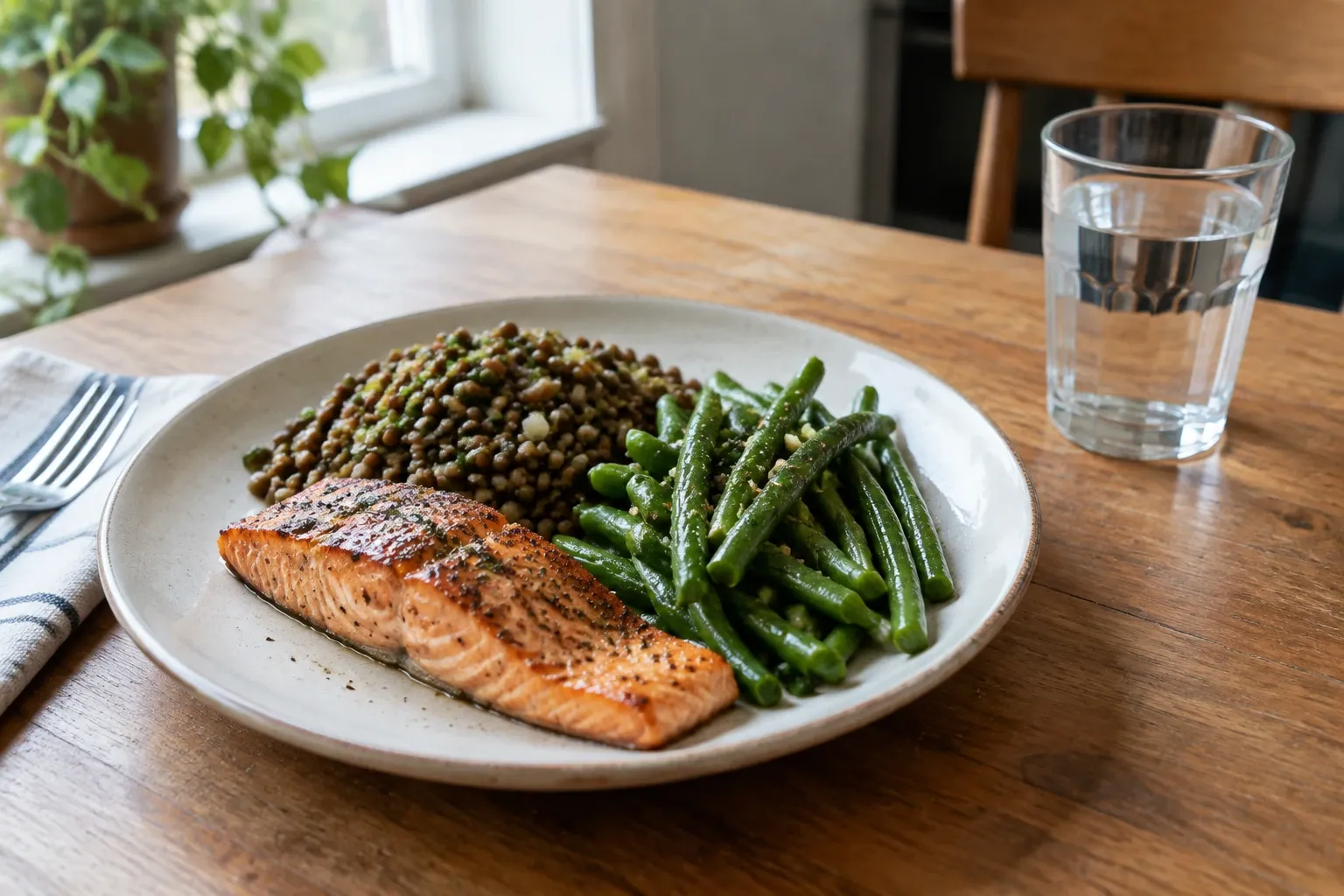
UK guidance gives most adults a reference intake based on body weight, while sports nutrition guidance allows for higher needs during regular, demanding training. Those figures serve different purposes: the first is a general population reference, not a performance target for every active person. Here’s how to calculate both, decide which is relevant to you, and build a day of meals around protein without losing sight of carbohydrates, energy and overall balance.
Which protein target applies to you?
The UK adult Reference Nutrient Intake (RNI) is 0.75g of protein per kilogram of body weight per day, according to the British Nutrition Foundation’s protein guidance. It is a population reference, not a personalised target for muscle gain. For example, at 70kg, the calculation is 70 × 0.75 = 52.5g a day.
For people doing regular, demanding strength or endurance training, the Foundation gives a higher range of around 1.2–2.0g/kg/day. At 70kg, that works out to 84–140g a day. This broad range is intended for strength and endurance athletes; it doesn’t mean everyone who exercises needs the top end. Your training volume, goals, food intake and circumstances matter. Ordinary activity alone is not a reason to assume you need a high-protein diet.
How do you calculate a practical starting point?
Multiply your body weight in kilograms by the relevant figure. If you’re training consistently and want to estimate within the athletic range, choose a point within that range rather than treating its upper limit as a goal. The British Dietetic Association’s sport and exercise guidance notes that muscle gain also involves resistance training and adequate energy and carbohydrate, not protein alone.
These calculations are estimates, not a diagnosis or a prescription. If you have a health condition that affects what you should eat, seek individual advice from a GP or registered dietitian before changing your intake substantially.
What foods can help you reach it?
You can get protein from meat, fish, eggs and dairy, as well as beans, lentils, chickpeas, tofu, nuts and seeds. Mix sources across the day and choose portions that fit your appetite and eating pattern. The BDA’s food examples include a small cooked chicken breast, fish and baked beans; the protein amount varies by food and portion, so check packaging or a reliable food database when you need a closer estimate.
A shake can be convenient, but it is not essential. Whole foods also provide other nutrients, and focusing only on protein can crowd out carbohydrates, which support exercise. For a wider view of everyday meals around training, see how to eat for training and recovery.
Should you spread protein across meals?
Rather than trying to make up most of your intake at dinner, include a protein source at several meals. The British Nutrition Foundation discusses distributing protein through the day and around key training sessions. This can be as simple as yoghurt at breakfast, beans or tuna at lunch, and eggs, tofu, fish or meat at dinner. There is no need to make every meal identical or to hit a precise number at every sitting.
How can you check whether your approach is working?
Start by looking at a few ordinary days of eating, not just one unusually high- or low-protein day. Compare your approximate intake with the reference or training range that fits your situation. If you’re already eating enough, adding more may not help; high-protein choices can also add energy and displace other foods. Keep enough carbohydrate in your meals for your training, and adjust portions based on your routine and appetite rather than chasing the biggest number.
Frequently asked questions
Do I need protein immediately after every workout?
Not necessarily. Your overall daily intake is more important than hitting a narrow post-workout window. If you train hard, having a protein-containing meal or snack after the session can be a practical way to spread intake across the day, especially if your next meal is some time away. For shorter or less demanding sessions, regular balanced meals may be enough.
Do I need protein powder to reach my target?
No. Protein powder is a convenience, not a requirement. Foods such as dairy, eggs, fish, meat, beans, lentils, tofu and other soya foods can contribute to your daily total. A supplement may be useful when food is inconvenient, but check its ingredients and count it as part of your overall intake rather than an extra target.
Should I use my current weight to calculate protein if I want to lose weight?
A body-weight calculation can be less straightforward if you have a higher body weight or are following a calorie deficit. Sports nutrition ranges are not automatically suitable for every person or goal. If you have a medical condition, are pregnant, or need a specific weight-loss plan, ask a GP or registered dietitian for individual advice rather than applying an athlete range on your own.