Beginner running pace is the pace you can control
If your first runs feel too fast, slow down before chasing a target on your watch. A useful beginner pace is one you can repeat with controlled breathing, even if that means run-walk intervals.
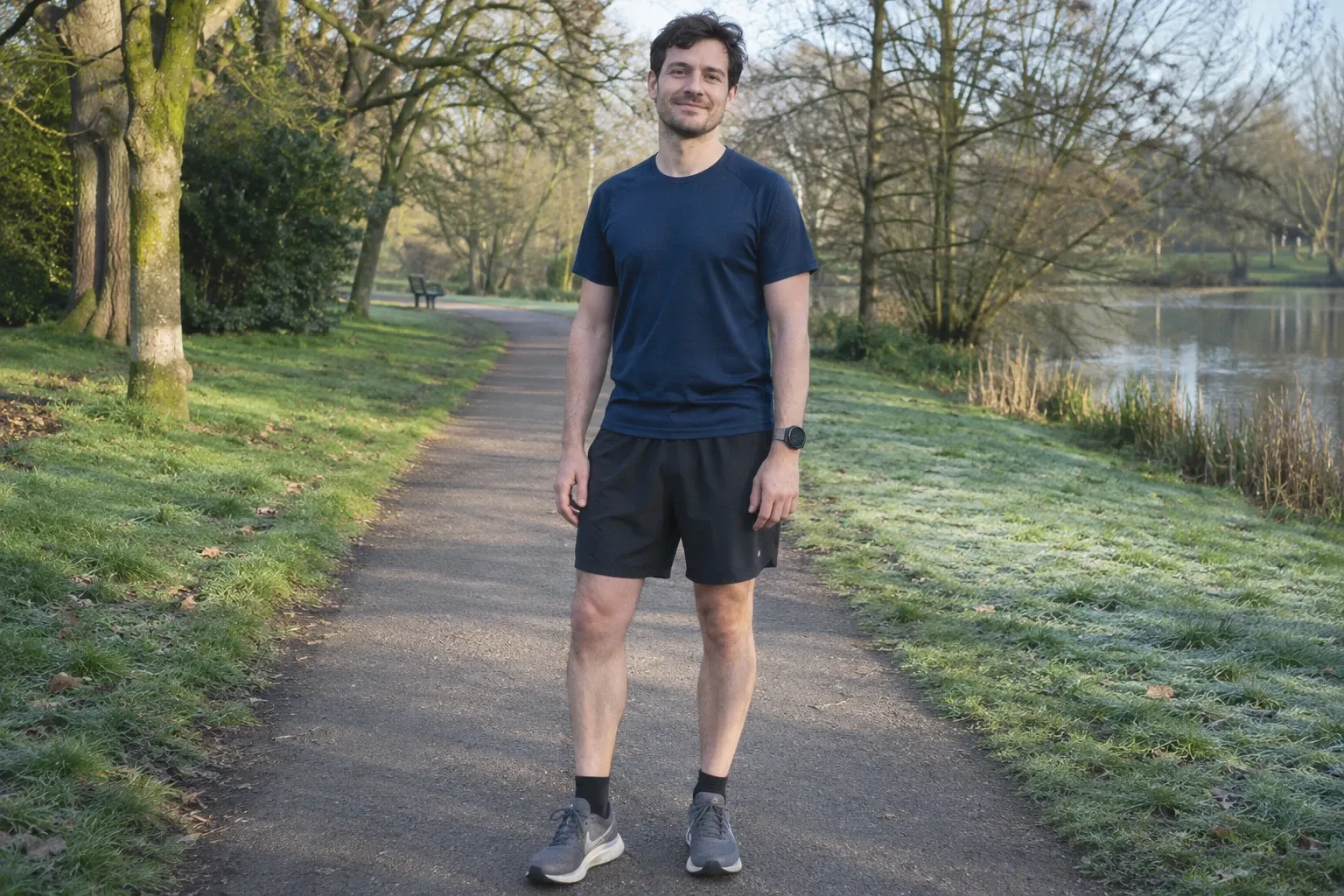
You set off at a pace that looks reasonable on someone else’s watch, then find yourself gasping before the first kilometre is over. That does not mean you are unsuited to running; it may mean the number is not right for you today. Fitness, terrain, weather and how rested you are all affect how a pace feels.
What should an easy beginner pace feel like?
For an easy run, aim for an effort you can sustain without forcing your breathing. A simple check is the talk test: the CDC says moderate-intensity activity generally lets you talk but not sing, while vigorous activity leaves you unable to say more than a few words without pausing for breath. Running can feel vigorous, so use this as a guide to your effort, not a pass-or-fail test or a prescribed running pace. If you can only get out a few words, slow down, shorten your stride or take a walk break.
There is no universal safe pace. Your effort can shift with hills, wind, heat, sleep, stress and how you feel that day. The same watch reading may feel comfortable on a flat, cool route and demanding on a climb. If you are new to running, it is reasonable for easy efforts to include walking; the useful question is whether you can finish feeling in control, not whether you matched a particular number.
What does min/km mean on a running watch?
Pace is the time it takes to cover a unit of distance. In the UK, running apps commonly show minutes per kilometre, written as min/km. A lower number means a faster pace: 6:00 min/km is quicker than 7:00 min/km because you cover each kilometre in less time. Speed in kilometres per hour works the other way around, so check which unit your watch is displaying before comparing figures.
Here are illustrative calculations, not recommended targets:
- At 6:00 min/km, 5 km takes 30 minutes: 6 minutes × 5 kilometres.
- At 7:00 min/km, 5 km takes 35 minutes.
- At 8:00 min/km, 5 km takes 40 minutes.
- At 7:00 min/km, 10 km takes 70 minutes if you could hold exactly that pace throughout.
These simple estimates assume the pace stays constant from start to finish. They are arithmetic, not predictions: a longer distance may feel harder, and stops, hills or changes in effort alter your actual time. A kilometre split is the time recorded for one kilometre; compare several splits rather than reacting to a brief fluctuation in GPS pace.
Should you choose a pace, a talk test or run-walk intervals?
Each method answers a different question. Pace tells you how quickly you covered a measured distance. The talk test gives you a quick, personal check on effort. Run-walk intervals let you control how long you run continuously while you build confidence and stamina. You can use more than one: follow planned intervals, use conversation to keep the running portions comfortable, and look at pace afterwards as information rather than a score.
If you want a structure, the NHS Couch to 5K plan provides a clear example rather than a speed benchmark. It runs over 9 weeks, schedules 3 runs a week, and starts with a 5-minute warm-up walk followed by 1-minute running intervals and 1 minute 30 seconds of walking, repeated 7 times in total, followed by a final 1-minute run. The plan builds towards running for 30 minutes; its emphasis on time and taking things at your own pace is more useful to a beginner than copying a faster runner’s splits. For the bigger progression from an initial run to longer goals, see how to build up to a first running challenge.
If you want to include strength work, keep it manageable alongside your runs. A simple strength routine for runners can complement training, but it does not tell you what pace to run. Avoid adding faster running and extra strength sessions all at once if that leaves you struggling to recover.
How can you put a comfortable pace into practice?
- Start with a gentle warm-up walk, then begin the running portion slower than you think you need to.
- Check your breathing and try saying a short sentence aloud. If you can talk but not sing, that broadly matches the CDC’s description of moderate effort; if you can only manage a few words before a breath, ease off.
- Use planned walk breaks when they help you keep the session controlled. If you are using a beginner plan, follow its intervals instead of replacing them with a continuous run.
- After the session, review the whole run: how the effort felt, whether you needed to slow down, and whether your pace changed sharply on hills or near the end.
A watch can help you spot patterns, but instantaneous pace may jump around, particularly under trees, between buildings or on a winding route. If the number distracts you, hide it during the run and review average pace afterwards. You can also compare the same route under similar conditions, while remembering that differences in weather or how you feel make a perfect comparison unlikely.
How do you know when to change your pace?
Do not speed up simply because one run felt easy. Repeat a comfortable effort and see whether it remains manageable; gradually building the time you spend running is a separate decision from trying to run faster. The NHS advises against increasing running intensity or distance too quickly and suggests doing a similar run at least 3 or 4 times before increasing pace or distance. That is general NHS advice, not a guarantee against injury or a requirement that overrides how you feel.
Treat pain that changes your stride, becomes severe, or does not settle as a reason to stop and reassess rather than run through it. The NHS Couch to 5K guidance says to listen to your body and stop if something does not feel right; if you are concerned about your health before starting, speak to a GP. Your pace is a tool for describing a run, not a measure of your worth or a reason to ignore symptoms.
Frequently asked questions
What is a good running pace for a beginner?
There is no single pace that suits every beginner. Start at an effort that lets you stay in control, and use the talk test rather than copying another runner’s minutes per kilometre. If you cannot speak more than a few words without pausing for breath, slow down or walk. Your comfortable pace may change as you build consistency.
Should beginners run by pace or by time?
For easy runs, time and effort are often more useful than a pace target, especially when you are new or running on varied terrain. A pace display can still help you learn what different speeds feel like, but it should not dictate every session. If you are following a structured beginner plan, use its run and walk intervals rather than adding extra speed goals.
Is a 7-minute kilometre slow for a new runner?
The number alone cannot tell you whether it is slow or fast for you. A pace of 7:00 min/km means you cover one kilometre in seven minutes, but the effort depends on your fitness, route and conditions. If you can maintain a controlled effort, it may be suitable; if you are straining, ease off regardless of what the watch says.
Should I walk if I cannot keep my pace?
Yes. Walking is a practical way to bring your effort back under control, not a failure. Use a walk break, then resume at a pace that feels manageable. The NHS Couch to 5K plan itself alternates running and walking at the start, so beginners do not need to run continuously or hit a particular speed from their first session.