A simple way to try mindfulness meditation
If your mind keeps running through work, training or tomorrow’s to-do list, mindfulness meditation offers a way to pause and notice what is happening now. You can start with your breath, without expecting your thoughts to stop.
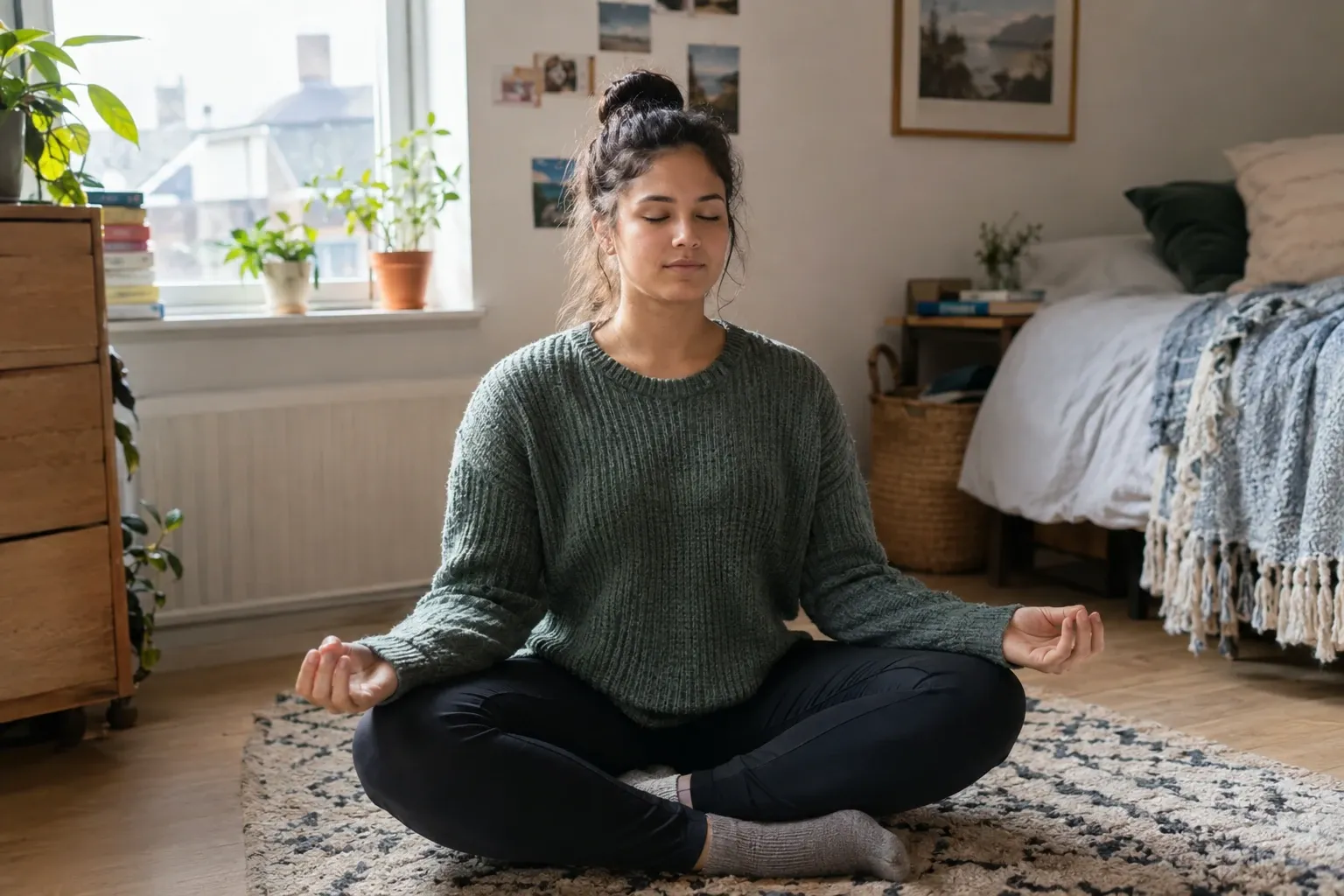
Mindfulness means paying attention to what is happening in the present moment, including thoughts, feelings and sensations, rather than getting pulled along by them. Meditation is one way to practise that attention. It does not require special equipment or a completely quiet mind. Here’s what a beginner’s session can involve, what the evidence suggests about possible benefits, and where to find NHS guidance if you want to explore further.
What does mindfulness meditation involve?
Mindfulness is the practice of noticing what is happening in and around you in the present moment. During meditation, you might pay attention to the breath, sounds, thoughts or sensations in your body. When your attention wanders, you notice and bring it back, without trying to make your mind blank. The NHS explanation of mindfulness describes this as one way to practise paying attention.
It can be done sitting on a chair, standing or walking. A comfortable, supported position is more important than sitting in a particular pose. If focusing on your breath feels uncomfortable, try noticing sounds or the feeling of your feet on the floor instead.
What can the evidence tell you?
Research suggests mindfulness-based programmes may help some people with outcomes such as anxiety or low mood, but results vary. A review of 44 meta-analyses found that effects were generally stronger when programmes were compared with no intervention or other passive controls, and smaller or less often statistically significant against active controls. The authors also noted limitations in the evidence, including inconsistent reporting of adverse effects. These findings concern varied structured programmes, not a promise that a short meditation will treat a health condition. See the systematic review of mindfulness-based interventions for its scope and limitations.
Mindfulness is not right for everyone. The NHS says some people find it unhelpful or feel worse, and advises that more research is needed for some mental health conditions. Treat a beginner’s exercise as an optional wellbeing practice, not a replacement for clinical care.
How can you try a 10-minute practice?
Set a timer for 10 minutes and choose a place where you can sit without needing to stay perfectly still. The time is a manageable starting point, not a medically established dose.
- Sit comfortably, with your feet supported, and let your hands rest.
- Notice the points where your body touches the chair or floor.
- Bring your attention to the feeling of breathing, perhaps at your nostrils, chest or abdomen. Let the breath take its natural course.
- When you notice a thought, sound or distraction, acknowledge it and gently return to the breath. There is no need to criticise yourself.
- When the timer ends, notice how you feel before moving on with your day.
If focusing inward feels uncomfortable, open your eyes and shift attention to a neutral sound or something you can see. You can stop at any point. The NHS offers a beginner’s meditation resource with further guidance.
Which kind of practice might suit you?
A breath-focused session is a straightforward first experiment, but it is not the only option. If sitting still makes you restless, try a mindful walk: notice your steps, the air on your skin and sounds nearby. A body scan shifts attention gradually between areas of the body. Guided audio can provide prompts if you would rather not keep track of the exercise yourself.
Choose one approach based on what feels comfortable and practical. If you are using mindfulness alongside training, keep it separate from goals such as pace or performance. For broader support with rest and pressure around training, see sleep and stress during training.
How can you tell whether it is useful?
After a few sessions, ask yourself whether the practice feels manageable, whether you can return to it without pressure, and whether you notice any change in how you respond to a busy moment. You do not need to feel calm during every session for it to count. If it consistently increases distress or feels unhelpful, stop or try an outward-focused activity instead. For persistent anxiety, low mood or other mental health concerns, seek support from a health professional rather than relying on meditation alone.
Frequently asked questions
Do I need to clear my mind to meditate?
No. Thoughts will come and go, and noticing that your attention has wandered is part of the practice. When you realise you are thinking about something else, gently return your attention to your breath or another sensation. You do not need to judge the thought, force it away or treat a wandering mind as a failed session.
How often should a beginner practise?
There is no single schedule that suits everyone. You could try a short session at a time you can repeat, then notice whether the routine feels useful and manageable. Regular practice may help you get used to the exercise, but it is not a guarantee of a particular result. If a daily session feels like another chore, try a less frequent routine.
Can mindfulness meditation replace mental health treatment?
No. A self-guided meditation is not a substitute for assessment or treatment when you need professional support. The NHS notes that mindfulness may not suit everyone and can make some people feel worse. If you are struggling with your mental health, speak to a GP or look into NHS Talking Therapies; stop practising if it is making you feel distressed.