A calmer breathing rhythm you can use when anxiety rises
When worry or panic makes your breathing feel fast or uncomfortable, a simple exercise may help you slow down. Here’s how to try one gently, what the evidence says and when to seek more support.
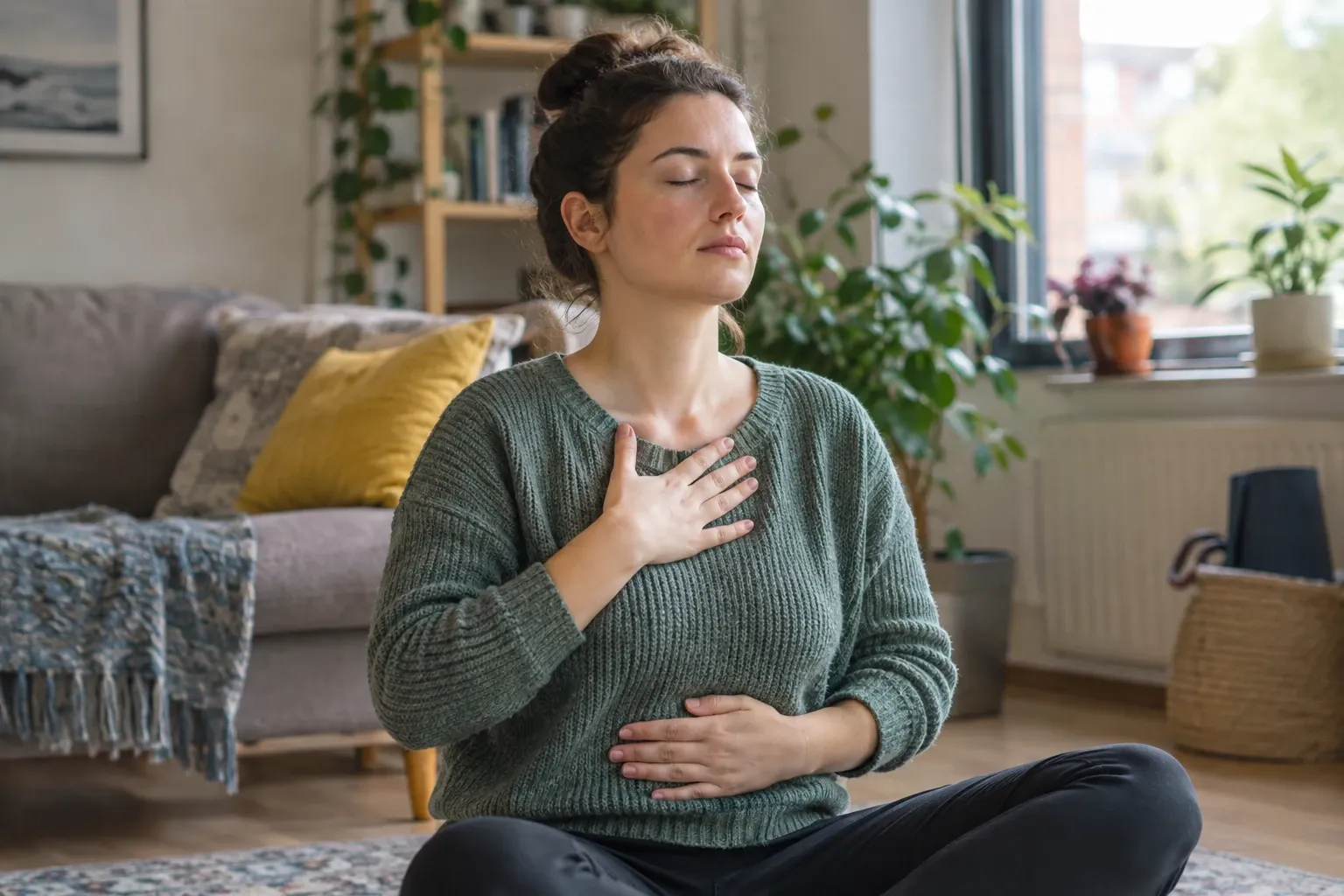
You do not need special equipment or a perfect breathing pattern to try a calming exercise. Start somewhere comfortable, keep the breath gentle rather than forcing it, and stop if focusing on breathing makes you feel worse. The options below draw on NHS advice and research reviews, which suggest breathing practices may help some people but do not work the same way for everyone.
Which breathing exercise is a good place to start?
For a straightforward option, try the NHS calming exercise. Sit with your back supported or lie down, loosen anything tight around your waist, and let your feet rest comfortably. Allow the breath to move into your belly as far as feels easy. Breathe in gently through your nose and out through your mouth; if it helps, count steadily from one to five on each part. Keep the breath regular and unforced for at least five minutes. The NHS instructions for breathing exercises emphasise comfort and regular practice.
There is no need to take unusually deep breaths or hold your breath. If counting feels awkward, leave it out and simply notice a comfortable, easy exhale. If paying attention to breathing increases your anxiety, stop and shift your attention to your surroundings or another calming activity.
What does research say about breathing and anxiety?
Research reviews find encouraging but not definitive evidence. A meta-analysis of 40 randomised controlled trials found respiratory-focused interventions reduced anxiety symptoms compared with control conditions, with stronger effects against inactive controls; the researchers also noted substantial variation between studies. A separate review of brief interventions found that breathing-only approaches had inconsistent results, depending on the technique and study. So breathing practice may be a useful tool, but a short exercise is not a guaranteed treatment for anxiety.
That distinction matters if you are choosing what to try. A gentle, repeatable exercise is a reasonable starting point; fast or forceful breathwork is not necessary. If you find it useful, a broader routine for sleep and recovery can also help you manage everyday pressures while training for a goal. See ways to manage stress and sleep for related habits.
How can you practise without adding pressure?
Try the exercise when you are relatively settled, so you can learn what feels comfortable before using it during a stressful moment. If it suits you, build it into an existing quiet part of your day rather than treating it as another performance target. The research review on breathing practices associated better outcomes with guided instruction and repeated sessions, but it does not establish one ideal routine for everyone.
During anxiety or panic, aim for a gentle, steady rhythm rather than trying to control every breath. The NHS advises slow, deep breathing for panic-related symptoms, but if focusing inward makes things worse, use an external anchor instead: name objects you can see, feel your feet on the floor, or speak with someone you trust. Avoid treating breathwork as a replacement for clinical care.
How do you know whether it is helping?
After practising, notice whether your breathing feels more manageable and whether you feel calmer, unchanged or more uncomfortable. You do not need to track a score or force a result. If the exercise repeatedly makes you feel worse, stop using it and consider another approach. Anxiety support can include more than self-help, and asking for help is appropriate even if you have already tried breathing techniques.
Contact your GP if anxiety, fear or panic is difficult to cope with, or if the steps you have tried are not helping. In England, adults can also self-refer to NHS Talking Therapies; availability and access routes differ across the UK. If you have severe difficulty breathing, seek urgent medical help rather than assuming anxiety is the cause. The NHS advice on anxiety, fear and panic explains when to seek medical support.
Frequently asked questions
How long should I practise a breathing exercise?
The NHS stress exercise suggests repeating a comfortable, gentle breathing pattern for at least five minutes. That is a practical starting point, not a target you have to meet. If you feel dizzy, more panicky or uncomfortable, stop and return to your normal breathing. You can try again another time, or use a different grounding method.
Can breathing exercises stop a panic attack?
They may help you manage the moment, but they cannot guarantee that a panic attack will stop. Try breathing gently and slowly only if it feels comfortable; you can instead focus on something visible around you or contact someone you trust. If panic attacks recur or interfere with daily life, speak to a GP or seek NHS talking therapies support.
Should I breathe into a paper bag when I feel panicky?
No. Do not use a paper bag to manage breathlessness or panic. Breathing symptoms can have different causes, and a paper bag is not a substitute for medical advice. If you have severe difficulty breathing, seek urgent medical help; for anxiety that is difficult to cope with, contact your GP or NHS 111 as appropriate.