What to know before trying a CBD vape
CBD vape liquids are made to be inhaled, unlike CBD oils intended to be swallowed. Here’s how to compare the products, what UK rules do and do not establish, and why vaping carries lung risks.
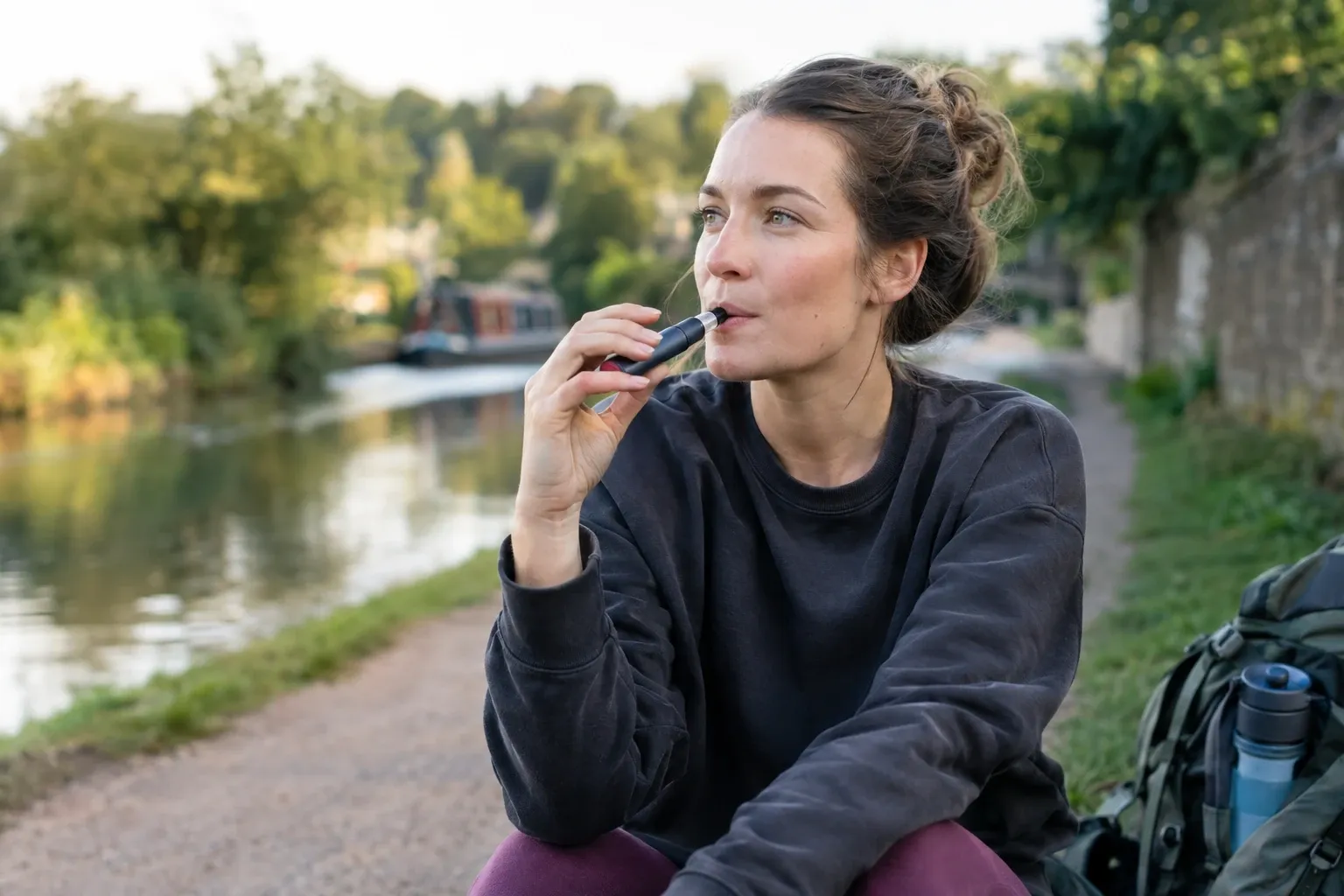
If you’re considering CBD vaping for relaxation or recovery, it can be hard to separate product descriptions from evidence. A vape heats a liquid into an aerosol that you inhale; CBD oil is usually taken by mouth. Those different routes matter: evidence or rules for one product type do not automatically apply to the other. The practical questions are what the liquid contains, whether it is actually designed for inhalation, and what is known about the risks of breathing in vape aerosol.
How is a CBD vape different from CBD oil?
A CBD vape liquid is designed to be heated in a vape device and inhaled as an aerosol. CBD oil is commonly sold as drops or a food supplement for oral use. These are different products for different routes of use, not interchangeable versions of the same thing. Never put an oral oil in a vape.
Vape liquids may contain carrier ingredients and flavourings in addition to CBD. Read the full ingredient list and check that the product is explicitly intended for inhalation. If the label does not clearly state what is in it, or gives no usable directions, do not use it. A product description saying “natural” or “premium” does not tell you whether its ingredients are appropriate to inhale.
If you want background on oral products, including the evidence and UK rules, see what to know about CBD oil. Its food status and safety information should not be taken as proof that a vape product is authorised or safe to inhale.
What do UK rules say about CBD vape products?
There is no single CBD-specific rule that makes every product advertised online lawful or safe. The Food Standards Agency’s CBD guidance concerns CBD as a food: it says CBD extracts, isolates and foods containing them are novel foods requiring authorisation before they can be sold legally as food. That requirement concerns food products; it should not be presented as a vaping-product approval scheme.
Separate rules cover e-cigarettes and refill containers. The government’s consumer product regulations set requirements for nicotine-containing products, including notification and limits on container and tank sizes. These rules do not, by themselves, confirm that a non-nicotine CBD vape has been tested for inhalation safety. The appropriate rules can depend on the product’s ingredients and how it is marketed.
When assessing a product, look for an ingredient list, clear instructions, a named manufacturer and traceable batch information. Be wary of claims that CBD vaping treats pain, anxiety, poor sleep or exercise-related problems: a marketing claim is not evidence of benefit or proof of regulatory approval.
What is known about vaping and lung risk?
Vaping is not risk-free, and the long-term effects are not yet clear, according to the NHS overview of vaping. Evidence that nicotine vaping can reduce exposure to some toxicants when an adult switches completely from smoking does not establish that CBD vaping is safe, beneficial or suitable for someone who does not smoke.
Inhaling an aerosol is different from swallowing CBD. A product’s CBD content does not tell you what else you may breathe in when it is heated, or how those ingredients affect your lungs. There is not enough evidence here to give a reliable estimate of the lung risk from CBD vapes specifically, so avoid treating “nicotine-free” or “THC-free” as synonyms for harmless.
If you do not smoke or vape, starting CBD vaping adds an inhalation exposure without an established fitness or recovery benefit. If you smoke and are considering vaping as a way to quit, seek advice from an NHS stop-smoking service; evidence about nicotine vaping for quitting is not the same as evidence about CBD products.
How can you make a more informed choice?
Start by deciding whether you need a product for inhalation at all. If you are considering CBD for a health concern, speak with a pharmacist or GP, especially if you take medicines: CBD can have side effects and interact with some medicines, and a vape’s route of use does not remove those concerns. For general information about CBD and its limits, use the broader CBD overview rather than relying on a vape seller’s claims.
If you still consider a CBD vape, check that the product is specifically formulated for vaping, inspect the complete ingredient list, and follow the device and product instructions. Do not modify liquids or mix products unless the manufacturer explicitly says to do so. Stop using it if you develop breathing symptoms, and seek medical advice if symptoms are severe or persistent.
Track what you use and any symptoms rather than assuming that a change in how you feel proves CBD caused it. If you notice coughing, breathlessness, chest discomfort or another worrying reaction, stop vaping and contact a healthcare professional. For severe breathing difficulty, seek urgent medical help.
Frequently asked questions
Can you put CBD oil in a vape?
No. Oral CBD oil is not the same as a liquid formulated for a vape, and you should not inhale it. Only use a product explicitly intended for vaping in a compatible device, and follow its instructions. If the ingredients or intended route are unclear, do not use it.
Does CBD vaping make you feel high?
CBD itself is not the intoxicating cannabinoid associated with the cannabis high, but a product’s contents may not match its label. Check for clear ingredient and cannabinoid information, and do not assume that “CBD” means a product contains no THC or other cannabinoids.
Is CBD vaping legal in the UK?
The answer depends on the product and its ingredients, and CBD food rules are not a complete guide to vape products. The Food Standards Agency treats CBD extracts and products added to food as novel foods requiring authorisation. For vaping liquids, check the relevant product rules and do not treat a seller’s claim as proof of compliance.